What I Saw in the Hospital Wasn’t Random
Will Loiseau
2/11/20263 min read
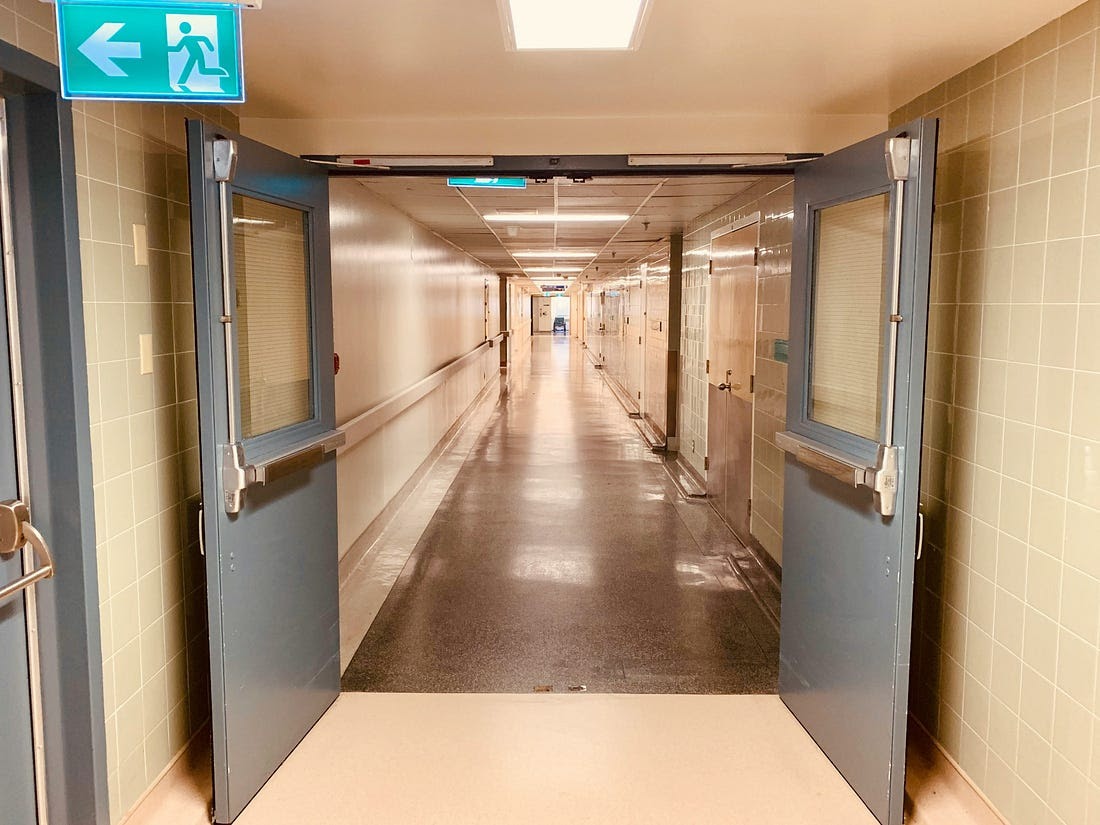
Last weekend, I spent the night in a hospital - not as a patient, but beside someone I care about. If I were facing a stroke, a heart attack, a traumatic injury, there is no place I would rather be. The precision of modern acute medicine is extraordinary. It can interrupt catastrophe. It can buy time. It can preserve life in moments that once guaranteed loss.
But that is not what filled the rooms that night.
The majority of patients were not there because of sudden accidents. They were there because something had been building for years. Blood pressure that crept upward. Blood sugar that drifted out of range. Arteries narrowing quietly. Weight accumulating gradually. Habits repeated so often they stopped feeling like choices.
Many of them were in my age bracket.
That unsettled me more than anything else.
Not because I see myself as immune, but because I know how easily I could have followed the same path. One of the most important decisions I ever made was to investigate why these “common” conditions are so common. I did the due diligence. I confronted my own self-sabotaging habits. I changed direction completely - a choice that worked for me, though I know everyone’s journey differs.
It wasn’t convenient. It wasn’t comfortable. But it worked.
Nothing tastes as good as waking up strong, clear, and pain-free feels - and I didn’t have to give up flavor to get there.
Inside the hospital, the focus was stabilization. Numbers were managed. Medications were adjusted. Protocols were followed. What I rarely heard discussed was the upstream architecture of health - nutrition quality, movement patterns, sleep consistency, chronic stress, environmental exposure.
The environment itself told a story.
The floors were polished and sealed, nothing like grass, sand, or soil - the textured surfaces our bodies evolved to touch. The walls were smooth and synthetic, unlike bark, stone, or anything shaped by wind and weather. The air was mechanically cooled despite mild temperatures outside, and I noticed I didn’t breathe as deeply as I do outdoors. Bright artificial lighting replaced daylight - no warmth or vitamin D from the sun that most people would benefit from, depending on the time of day and individual tolerance. The scent was sterile and chemical - efficient, controlled, but devoid of anything that signals life.
This is not criticism of cleanliness or safety. It is an observation about design. Hospitals are engineered for control and liability reduction, not for biological harmony.
In the newly renovated wing, I read a mission statement on the wall: “Our Mission - above all else, we are committed to the care and improvement of human life.” I believed some of the employees probably held that conviction deeply. But the system itself wasn’t designed to make it a reality.
At times there were blank stares from patients who looked far older than their chronological years. Down the hall, someone yelled intermittently - in pain or confusion. The sound echoed in a way that stays with you.
In the lobby, vending machines glowed with rows of salty, oily, sugar-laden snacks. After spending hours upstairs, their presence felt less surprising. They were consistent with the broader pattern.
Even the equipment caught my attention. I began noticing company logos on monitors and devices. Later, out of curiosity, I looked at the long-term stock performance of several manufacturers. The graphs moved steadily upward over the years.
That is not a conspiracy theory. It is the predictable outcome of a society in which chronic disease is common and growing. There is enormous infrastructure devoted to managing illness. There is comparatively little devoted to preventing it.
Whether insurance structures, reimbursement models, or institutional incentives shape that imbalance is a complex discussion. What isn’t complex is this: the system is optimized for intervention, not transformation.
When we repeatedly treat the consequences of lifestyle without addressing the causes, we shouldn’t be shocked by the results.
There is more noise than ever in the health space. Influencers, studies, counter-studies, sponsored content, headlines designed to provoke. It can be difficult to know who to follow and what to trust.
At some point, you have to reduce the volume.
Learning your own body becomes essential as we age. Pay attention to your own biomarkers. Notice how you feel after you eat, after you move, after you sleep. Seek guidance from someone who understands physiology rather than trends. The decisions we make daily now carry more weight than they did a generation ago because our environment is more engineered, more processed, and more detached from what built us.
What I saw that day was not random misfortune.
It was accumulation.
And accumulation works in both directions.
Start Your Transformative Journey Today
© 2026 True Iron Will LLC. All Rights Reserved .
Mailing Address:
1317 Edgewater Drive #1297
Orlando, FL 32804
TrueIronWill1@gmail.com